









See which LLM answers mention you, and which ones send you leads
Productive Shop monitors the prompts your buyers ask ChatGPT, Perplexity, Gemini and Claude, so you see where to grow your visibility and prove what AI search adds to your pipeline.

Trusted by B2B SaaS teams building visibility in AI search








Stop guessing whether AI search sends you buyers
You learn which AI engines, prompts and pages bring in leads, so you spend on what converts and cut what doesn’t.
We monitor your AI citations and act on what we find
Most LLM visibility trackers stop at the data. Our search team acts on it: we rewrite the pages AI engines skip and report the leads that follow in Sorge.
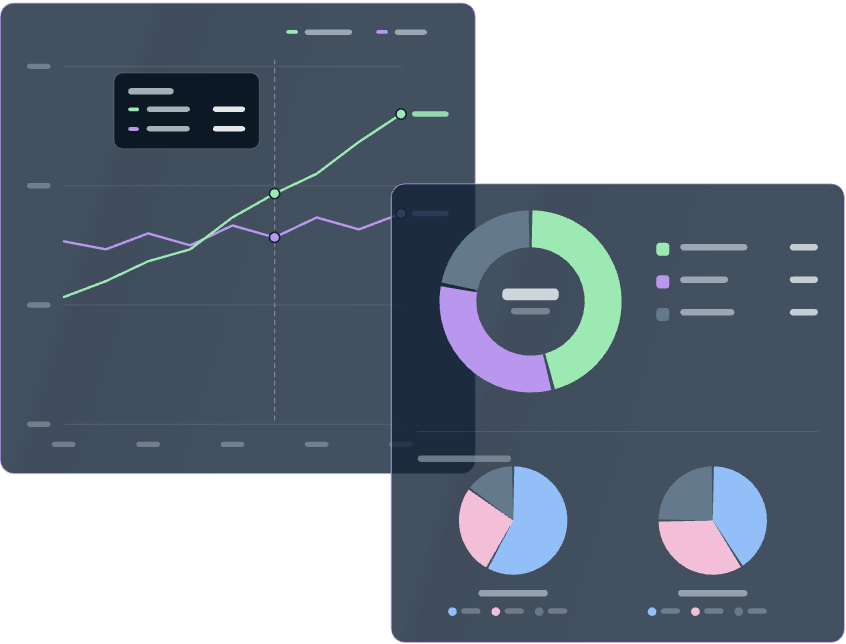
GROWTH
+1,500%
growth in AI citations
CONVERSION
+500%
increase in AI-driven conversions
TRAFFIC
+580%
increase in LLM traffic
VISIBILITY
+830
brand mentions in AI answers
Why SaaS leaders like to work with us

“When we started with Productive Shop, ranking in AI search wasn’t even part of the conversation. A year later, we’re leading our competitive category in search visibility and showing up in AI Overviews for the terms that matter most to our buyers. The results have genuinely changed how we think about organic as a growth channel.”

B2B SaaS teams that grew their LLM citations with us
-
HOSPITALITY TECHNOLOGY
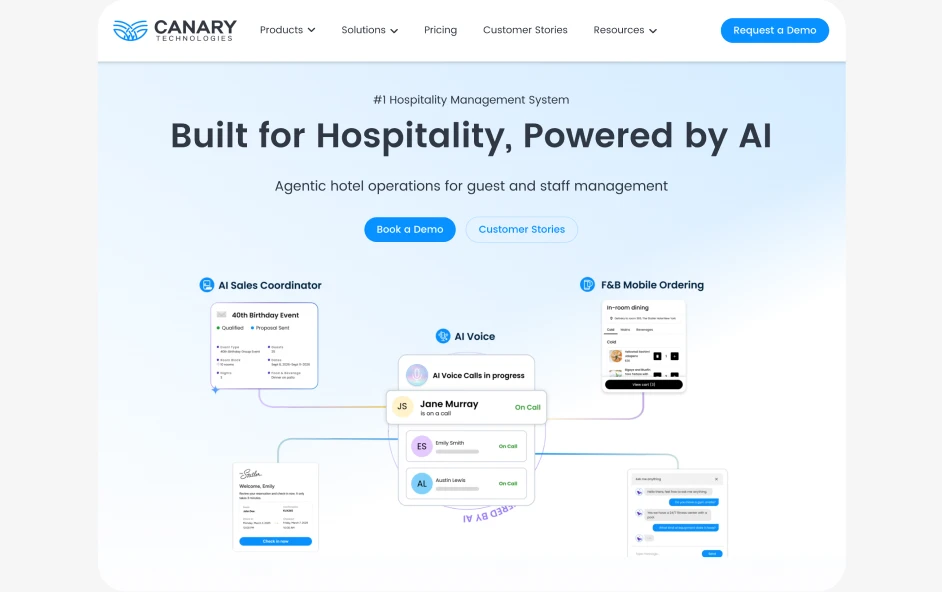
Canary: Turning AI citations into demo requests
-
SEO strategy
-
GEO strategy
-
Content enrichment and repurposing
-
Technical SEO and schema implementation
+1,550%
growth in AI keyword citations
+1,200%
increase in AI demo submissions
+588%
increase in LLM traffic

-
-
MARKETING OPERATING SYSTEM
Keen: Showing up in AI Overviews for buyer searches
-
SEO Consulting
-
Editorial Calendar
-
Content Writing
-
Technical SEO
+7,833%
growth in AI Overview keyword citations
+520%
increase in AI-driven conversions
+43%
increase in organic conversions

-

Where your numbers come from


AI engines we track
Tracking and analytics
CRM attribution
Everything you need to see what AI search brings in
-
LLM citation tracking
We run buyer prompts in ChatGPT, Perplexity, Gemini and Claude, logging each citation, so you see how often AI recommends you while buyers are still researching.
Before
- Your team checks a few prompts by hand and screenshots the answers
With Productive Shop
- Every buyer question tracked, with a record of how your citations change each month

-
AI visibility monitoring
Measure how often each AI engine mentions your brand, and which competitors it recommends instead.
Before
- You don't know if AI answers mention your brand or a competitor
With Productive Shop
- You know which AI tools mention your brand, which buyer questions they answer without you and who they recommend instead
-
Citation source analysis
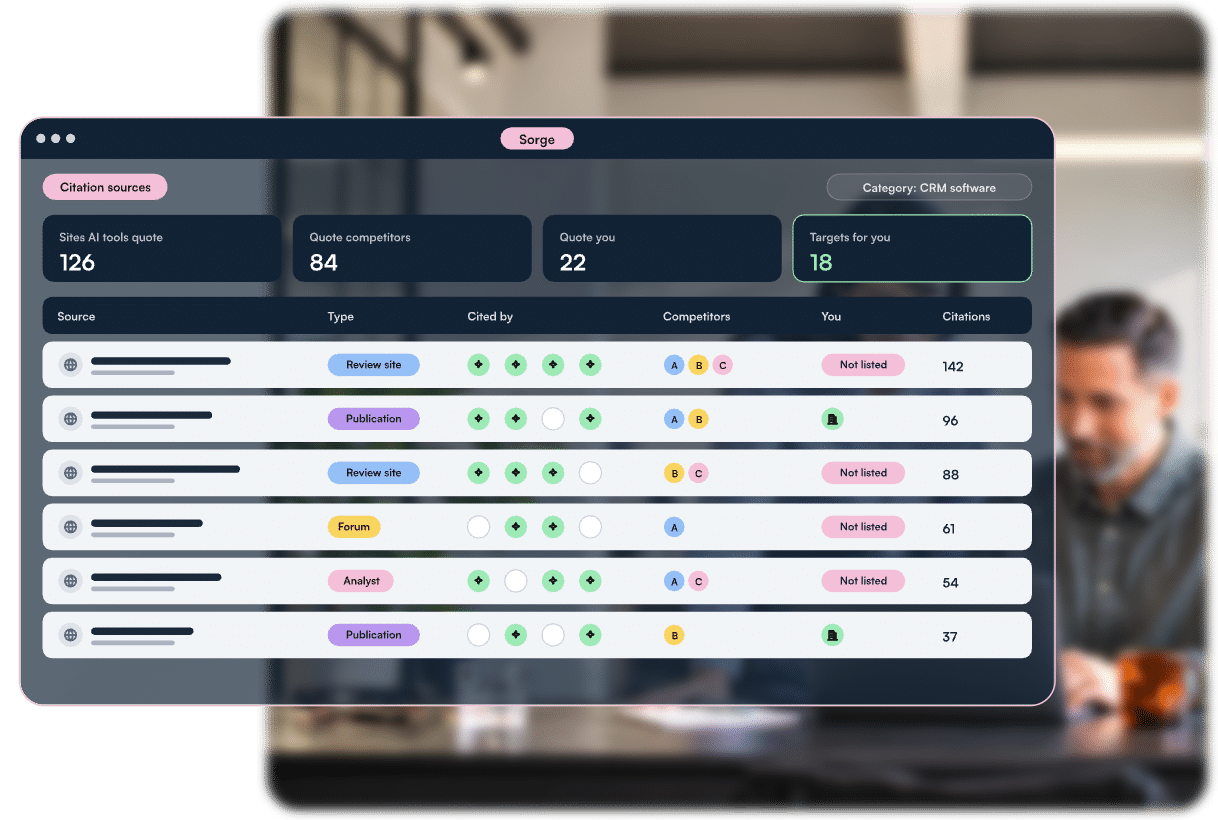
Monitor competitor citation sources across major LLM platforms and see which sites AI tools quote when they talk about your category.
Before
- You can’t tell which sites AI relies on when it talks about your category
With Productive Shop
- You get a list of publications and review sites to target for future citations
-
AI traffic analysis
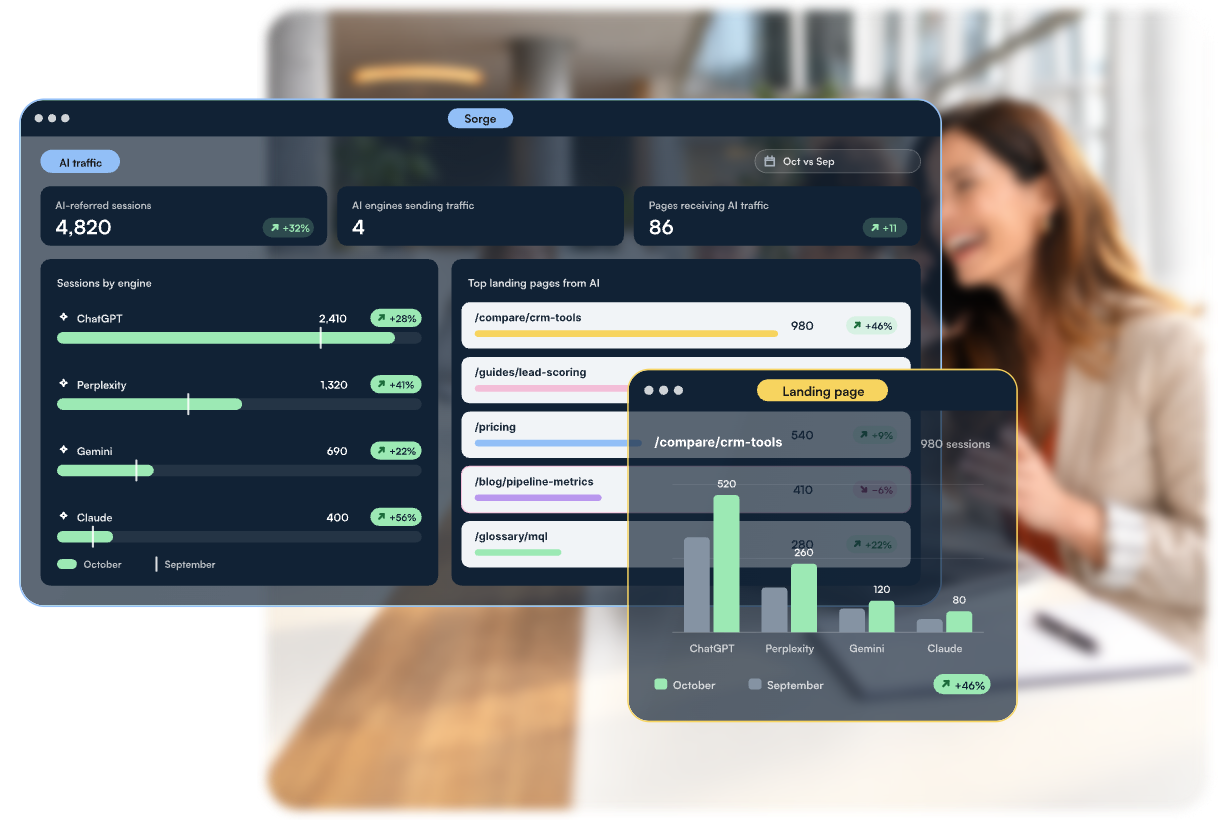
Sorge sorts AI-referred sessions by engine and landing page, then compares each with last month.
Before
- AI visits hide inside referral or direct traffic in your analytics reports
With Productive Shop
- You see how many sessions each AI engine sends and which pages they land on
-
Lead and pipeline attribution
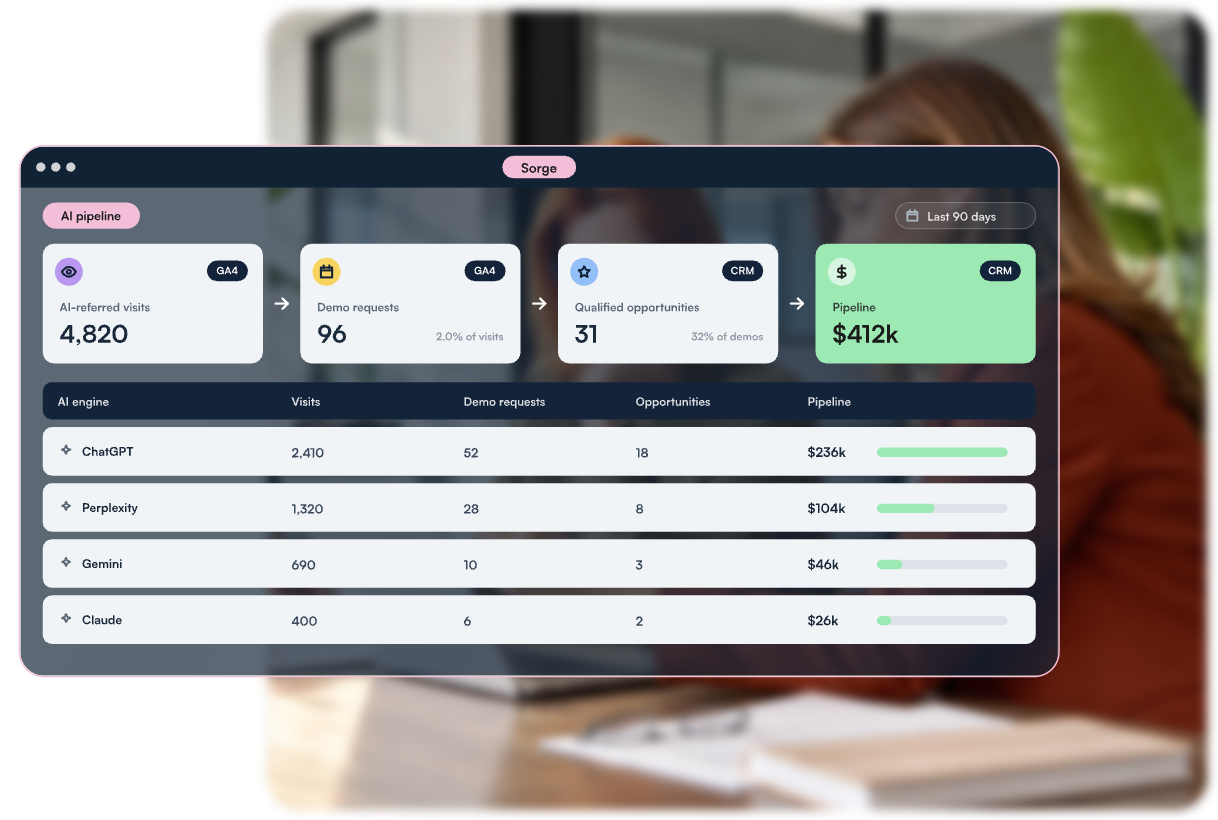
Connect AI-referred visits to demo requests in GA4 and to qualified opportunities in your CRM.
Before
- Your reports show AI traffic, with no link to leads or revenue
With Productive Shop
- You report AI search in leads and pipeline dollars instead of sessions or mentions
-
Citation gap prioritization
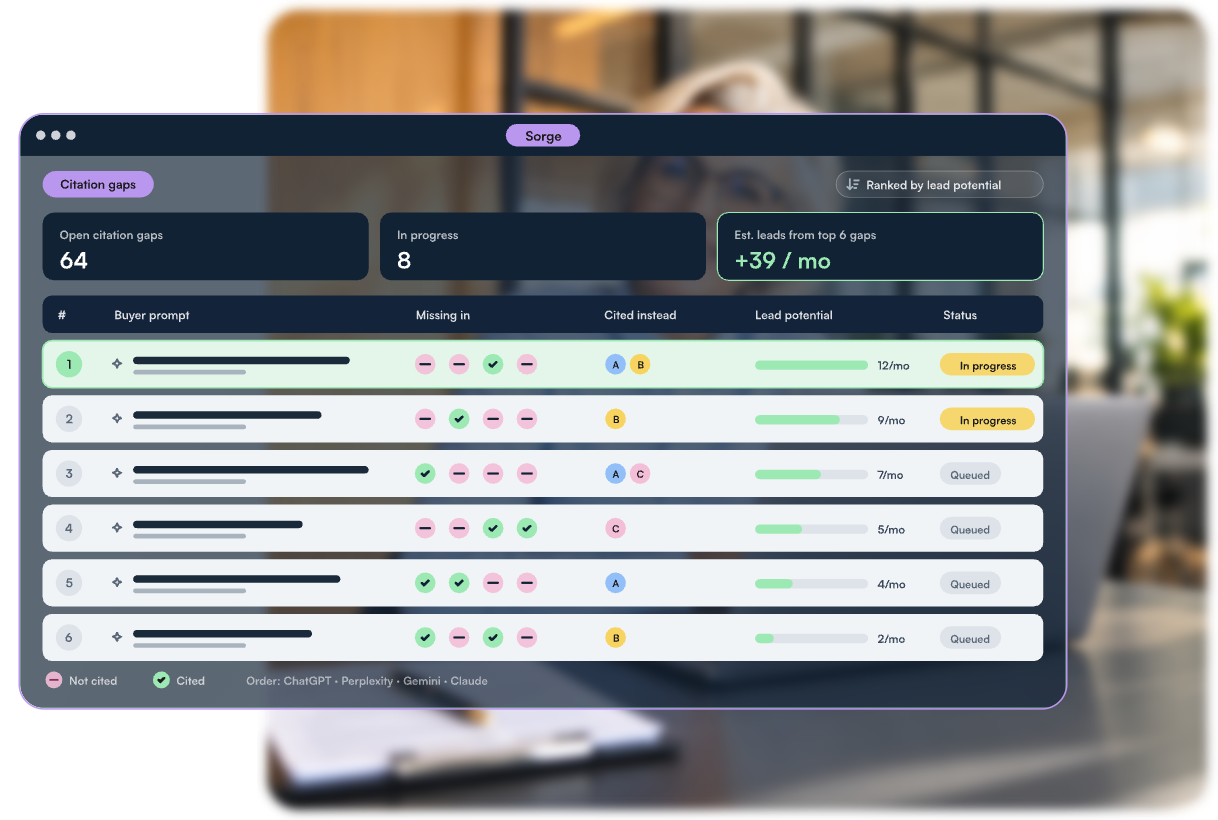
Sorge ranks citation gaps by lead potential, and our search team closes the highest-ranked first.
Before
- A long list of gaps and no idea which to fix first
With Productive Shop
- Our AEO and GEO work starts with the pages most likely to win leads
-
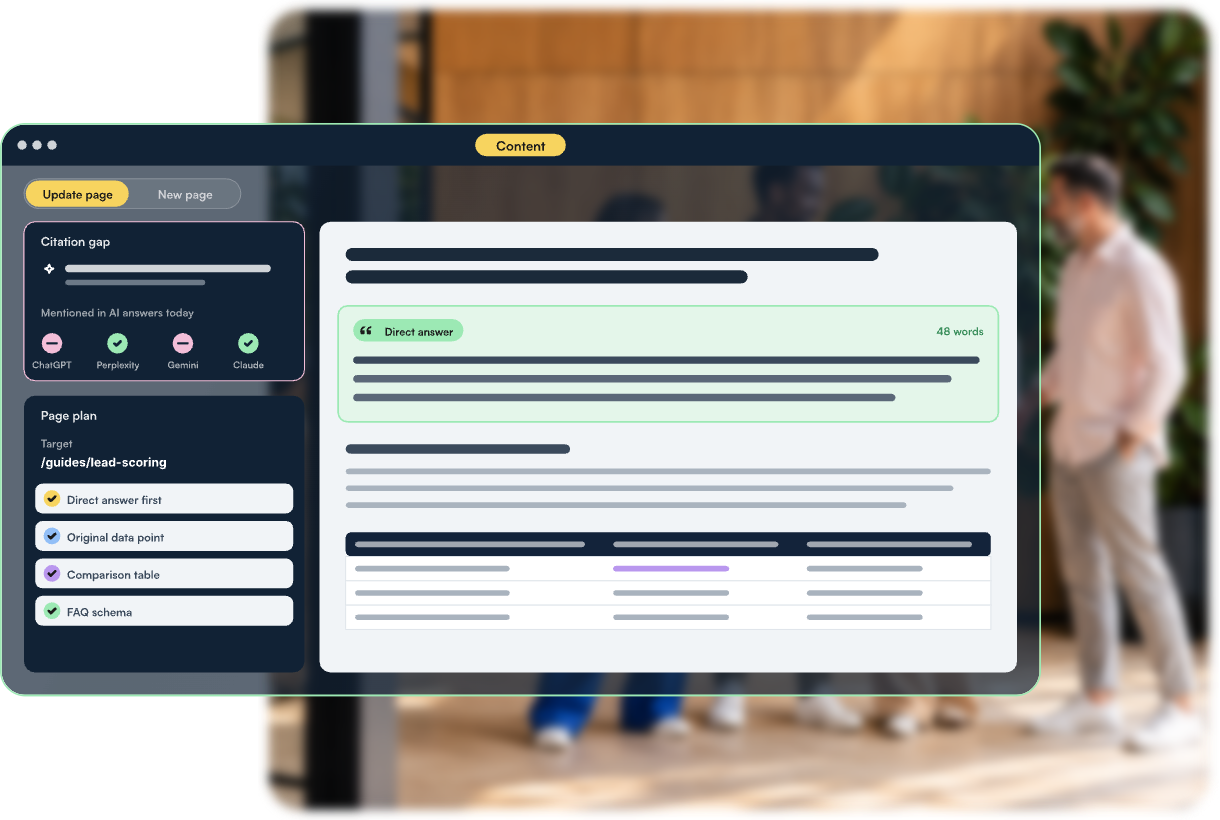
Content for citation gaps
Our writers build new pages and update existing ones for the questions where AI answers don’t mention you.
Before
- You publish new content without knowing which AI answers it should win
With Productive Shop
- Each new or updated page opens with a direct answer AI engines can cite


What works well alongside AI tracking
Track your LLM citations from prompt to pipeline
What we’ve learned about AI search
-
February 10, 2025 17 min read
Generative engine optimization: Insights and best practices
-
November 7, 2023 12 min read
Impact of SGE on SEO and the Web
-
May 9, 2025 22 min read
How to avoid AI writing patterns: The ultimate guide to AI-generated content for SEO and GEO
-
April 23, 2025 14 min read
How to track AI traffic to your website in GA4




Show up when buyers ask AI about your category
Talk to us to find out where AI recommends you today and what it takes to show up more.
Frequently asked questions
LLM visibility is how often large language models (LLMs) like ChatGPT, Perplexity, Gemini and Claude mention or cite your brand when buyers ask about your category. It covers three signals:
- Whether AI answers name your brand
- Whether AI answers link to your pages
- Which sources AI answers pull from
Strong LLM visibility puts your brand in front of buyers before they visit any website, which shapes your brand perception early in the buying process. Weak visibility means AI engines recommend other vendors for the prompts that matter most to your pipeline.
To monitor LLM visibility of your brand, follow these steps:
- Build a buyer prompt list from your ideal customer profile (ICP) and sales calls, so you track the questions buyers ask before they shortlist vendors.
- Run each prompt in ChatGPT, Perplexity, Gemini and Claude, since each engine cites different sources.
- Record whether each answer mentions your brand, links to your pages or cites another site.
- Filter AI-referred sessions in Google Analytics 4 (GA4) by engine and landing page, since GA4 groups them with other referral traffic.
- Repeat the prompts on a set schedule, because AI answers change over time.
Read our complete guide on how to track AI traffic in GA4.
To implement AI citation monitoring for brand visibility optimization, connect tracking to action by following these steps:
- Set a baseline of where each engine cites, mentions or skips your brand.
- Log the third-party domains AI answers cite for your category to find sites worth a mention.
- Connect AI-referred traffic to demo requests, then to opportunities in your CRM, to see which engines and pages bring in buyers.
- Find the prompts where AI answers leave you out, starting with those with high intent.
- Update or create pages that answer those prompts directly, with clean schema markup.
- Rerun the same prompts after each change to measure the impact.
Productive Shop tracks LLM citations by running your buyers’ prompts in ChatGPT, Perplexity, Gemini and Claude and logging which pages and sources each answer cites. Our search team picks the prompts based on your buyer personas, goals and industry. Sorge, our marketing operating system, connects that citation data to GA4, Google Search Console and your CRM.
You see AI traffic by engine and landing page, the leads it brings in and, with CRM access, the opportunities that follow. Our team reports results on a set cadence and you can check the numbers in Sorge anytime.
Productive Shop tracks ChatGPT, Perplexity, Gemini and Claude. Our search team runs the same buyer prompts in each engine, so you can compare where each one cites, mentions or skips your brand. For each engine, our Sorge platform reports the sessions it sends to your site, the pages those visitors land on and the leads they become.
Productive Shop tracks these LLM metrics:
- Citations and brand mentions by prompt and engine, to show where AI answers include you
- Citation sources, including the third-party domains each engine trusts for your category
- AI-referred sessions by engine, compared with the previous period
- Share of AI traffic per engine, to show which one sends the most visitors
- New users from AI search, separated from returning visitors
- Landing pages AI visitors reach first
- Demo requests and form fills from AI traffic, with a conversion rate per engine
- Leads, qualified leads and opportunities from AI search, when your CRM is connected
The best LLM analytics company for visibility monitoring depends on what you need the data to do. Look for a partner that:
- Tracks the same buyer prompts in ChatGPT, Perplexity, Gemini and Claude
- Shows which sources each engine cites for your category
- Connects AI-referred traffic to leads and pipeline, not just mentions
- Acts on the gaps it finds instead of handing you a report
Many self-serve tools track prompts and citation sources, then stop there. With Productive Shop, you go from tracking to attribution: Sorge, our marketing operating system, connects citation data to GA4 and your CRM, and our search team fixes the pages AI engines skip. You end up with more citations in the answers buyers read, and proof of what each one is worth.
Talk to us to find out which AI engines send you buyers.