



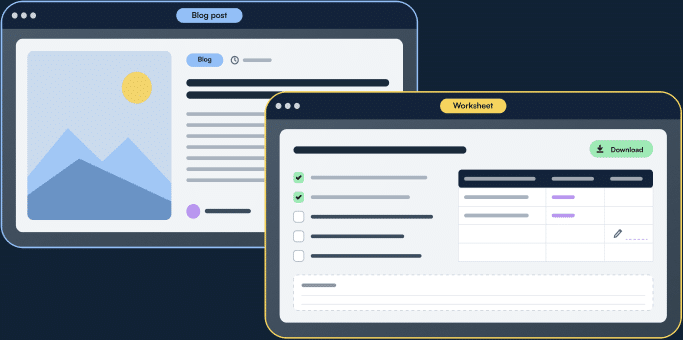







Your website, rebuilt and migrated, without starting from scratch
Productive Shop replatforms and migrates your website for a fraction of the time and cost of starting over. We map every page, move your content and test every form and redirect before and after launch, so you don’t lose traffic or rankings.
Trusted by industry leaders to grow their B2B SaaS websites


Productive Shop handles every part of your website replatforming and migration
A website migration touches more than your content. Your CMS, database, server and rankings all move together, and we manage each one with the same level of care.
Partner with site migration consultants who specialize in SaaS
Every migration starts with a technology consultation, so you land on the platform that fits your SaaS needs.

QA DEPTH
16-point checklist
Technical items verified before launch
PERFORMANCE
Over 30%
Average organic traffic growth after a platform rebuild
SPEED
2-4 months
From kickoff to launch, on average
MONITORING
Monthly
Site health and rankings are checked every month after launch
SUPPORT
3 months
Bug fixes covered after launch
COMPLIANCE
GDPR audit
Cookie policies checked and confirmed compliant
Why clients trust us with their SaaS websites

“Productive Shop did an outstanding job rebuilding our website within three months. They listened to our needs and developed a custom solution that matched our brand identity perfectly. Their expertise in SEO was especially helpful, as they were able to optimize our site for search engines and improve our online visibility. We highly recommend Productive Shop for their exceptional web development expertise and SEO consulting services.”

“Working with Productive Shop transformed not just our website, but our entire approach to digital brand management. Their team didn’t just build us a better website — they created a scalable system that empowered our internal teams to maintain brand consistency without constant external support. The results speak for themselves: a 36% increase in organic traffic.”
-
Commerce company
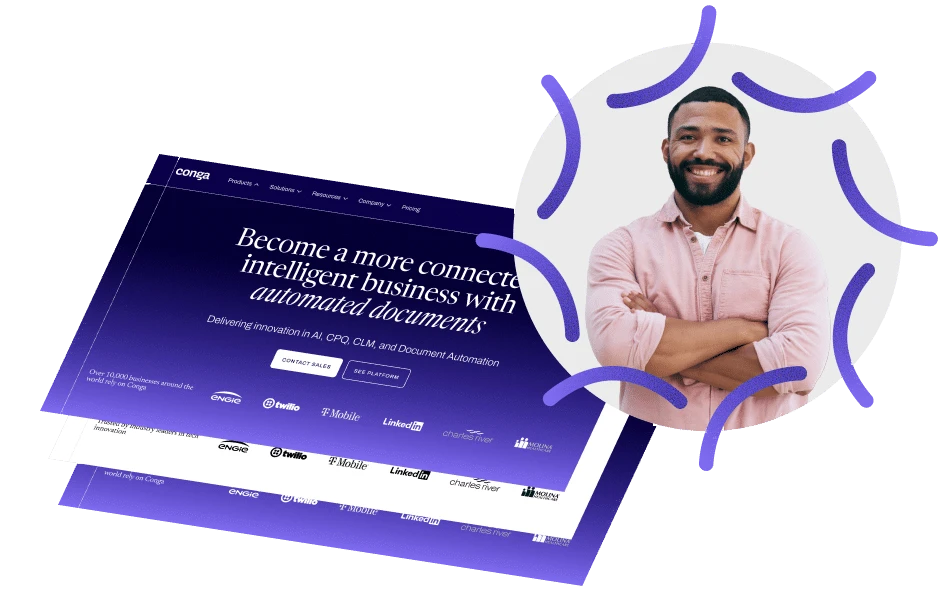
Conga: Rebuilt, then expanded
-
Website migration
-
Website design
-
Technical SEO
-
Copywriting
90%+
improvement in mobile page experience
36%
growth in organic traffic
93%
increase in accessibility and user experience

-
-
Cybersecurity
Brinqa: Rebuilt for speed and UX
-
Website development
-
Website design
-
Technical support
-
Copywriting
90%+
increase in mobile page experience
75%
decrease in bot traffic
100%
desktop page experience
-
The tech stack behind our website migration services


CMS
Hosting providers
Databases
Infrastructure tools
QA and monitoring tools
What pairs well with replatforming and migration
Automated services, backed by the team that knows SaaS
-
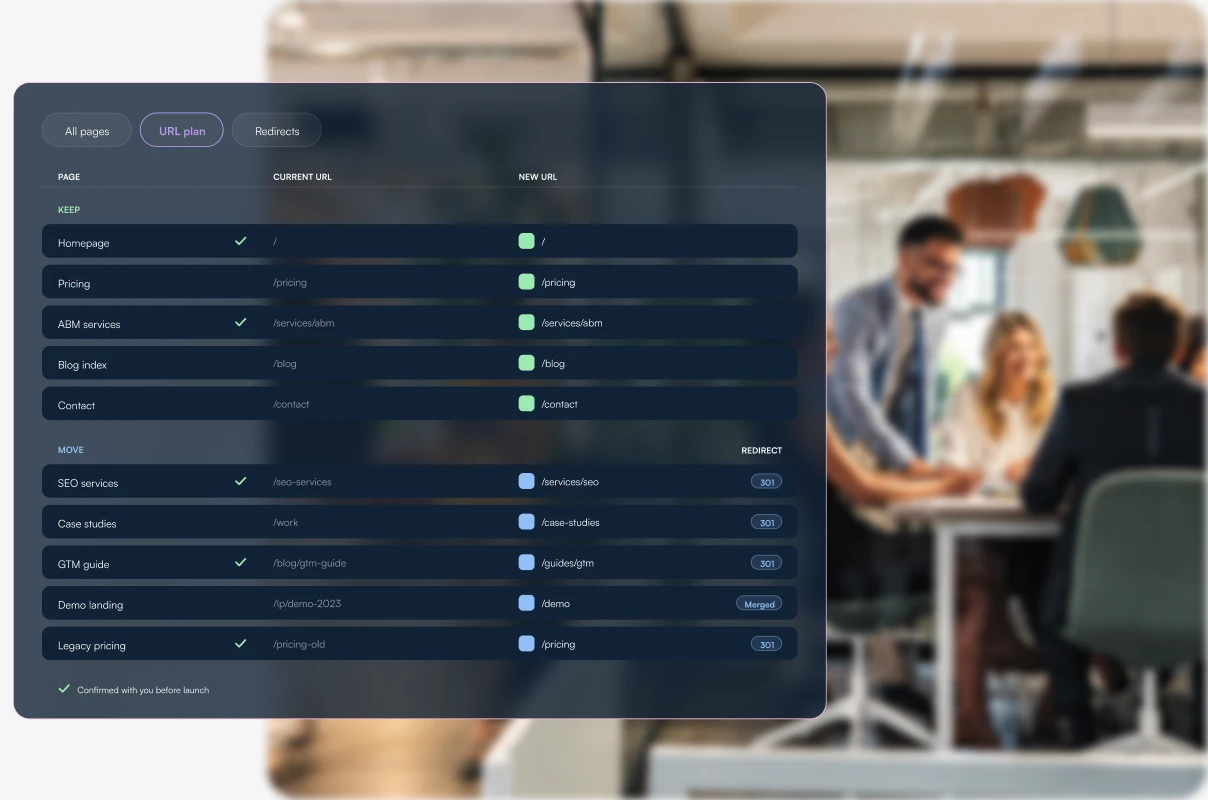
Migration strategy
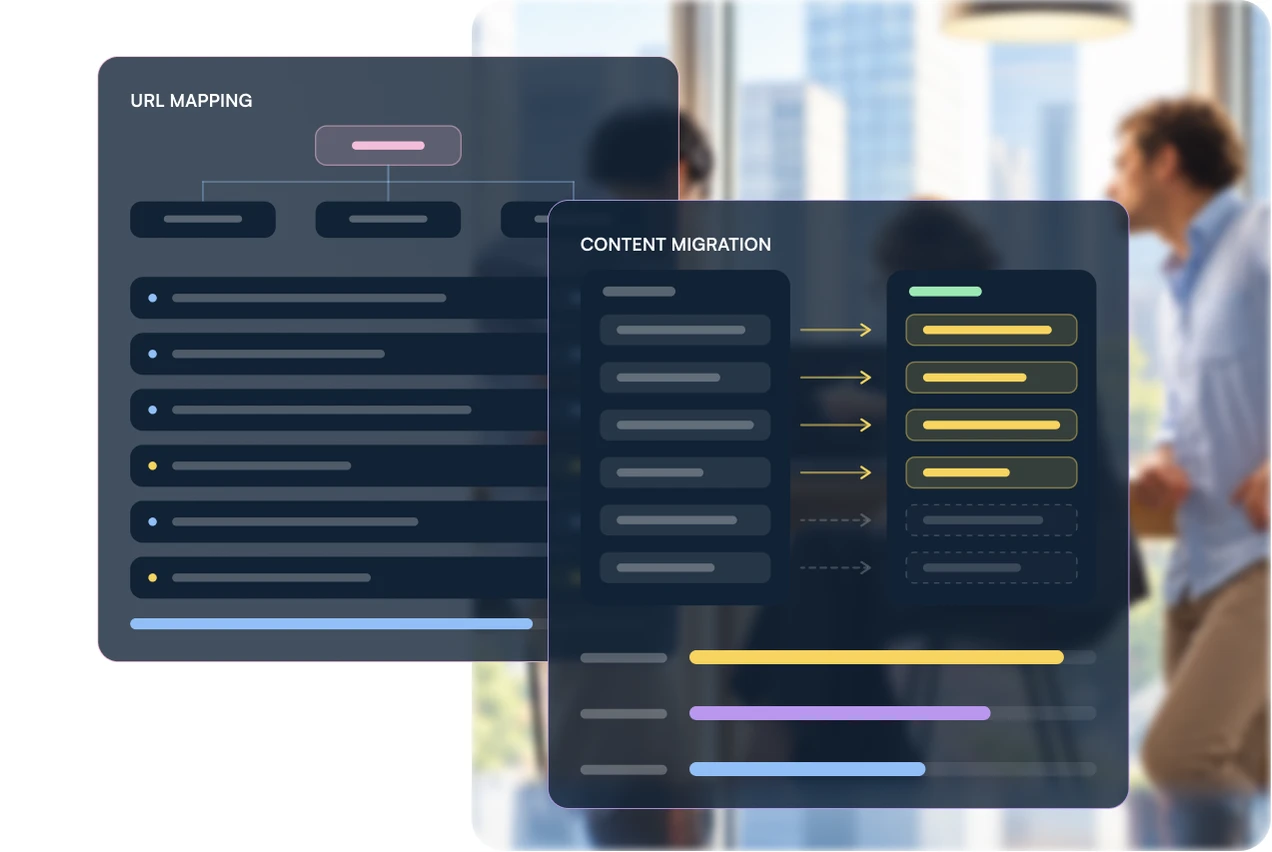
We map every page, decide what needs a new URL and what doesn’t and confirm navigation changes with you.
Before
- A guess at what should move first
With Productive Shop
- A mapped plan for every page, with reasons

-
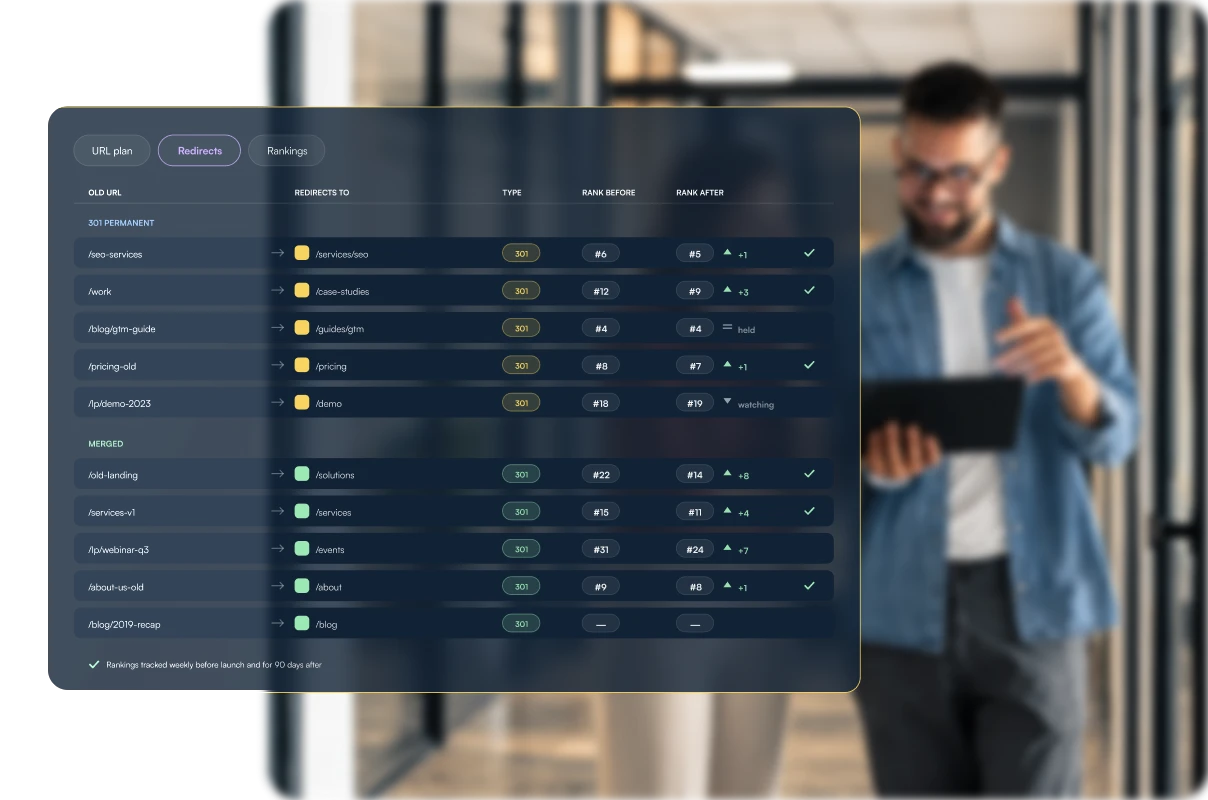
Redirect and rankings mapping
Every page that needs a new URL gets a permanent redirect and we track your rankings before and after.
Before
- Broken links and rankings that quietly drop
With Productive Shop
- Every redirect set, rankings tracked the whole way
-
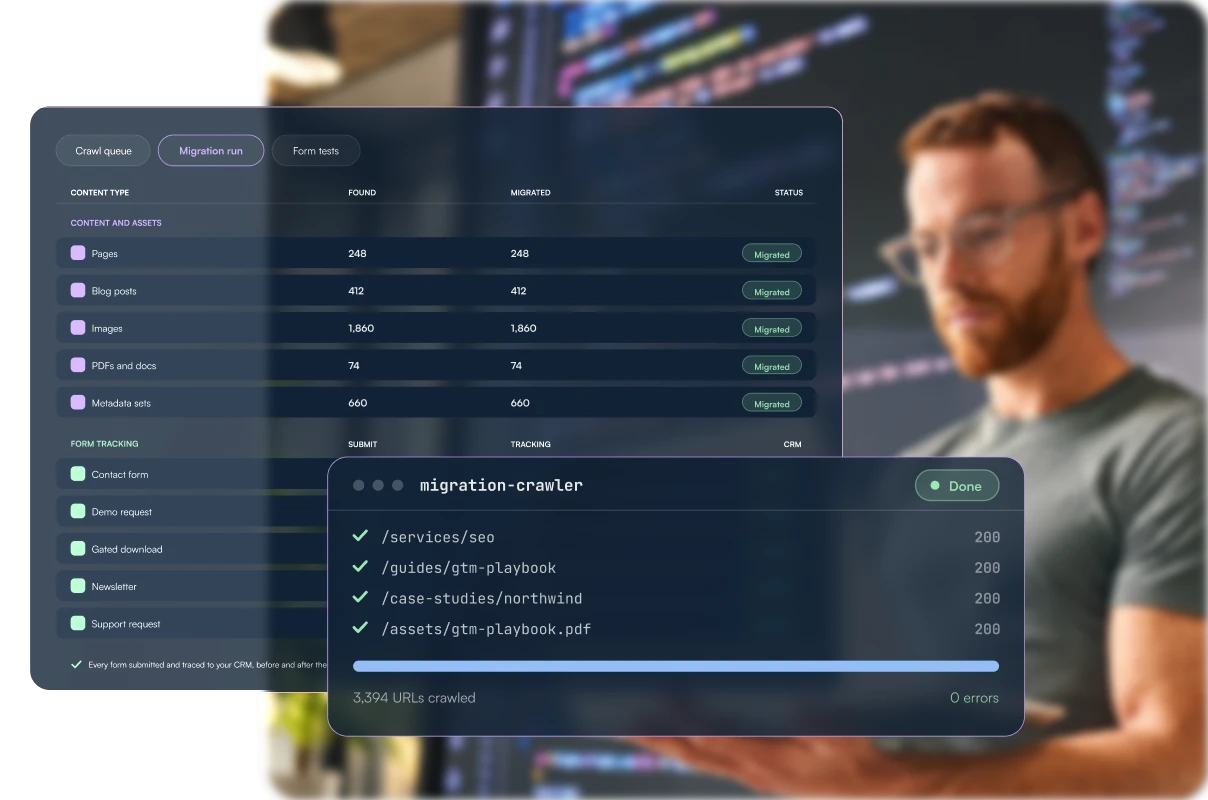
Automated content and asset migration
We build custom crawlers that move your pages, forms and data automatically and test every form’s tracking so leads keep flowing to your CRM.
Before
- Forms that quietly stop sending leads
With Productive Shop
- Every form tested, before and after the move
-
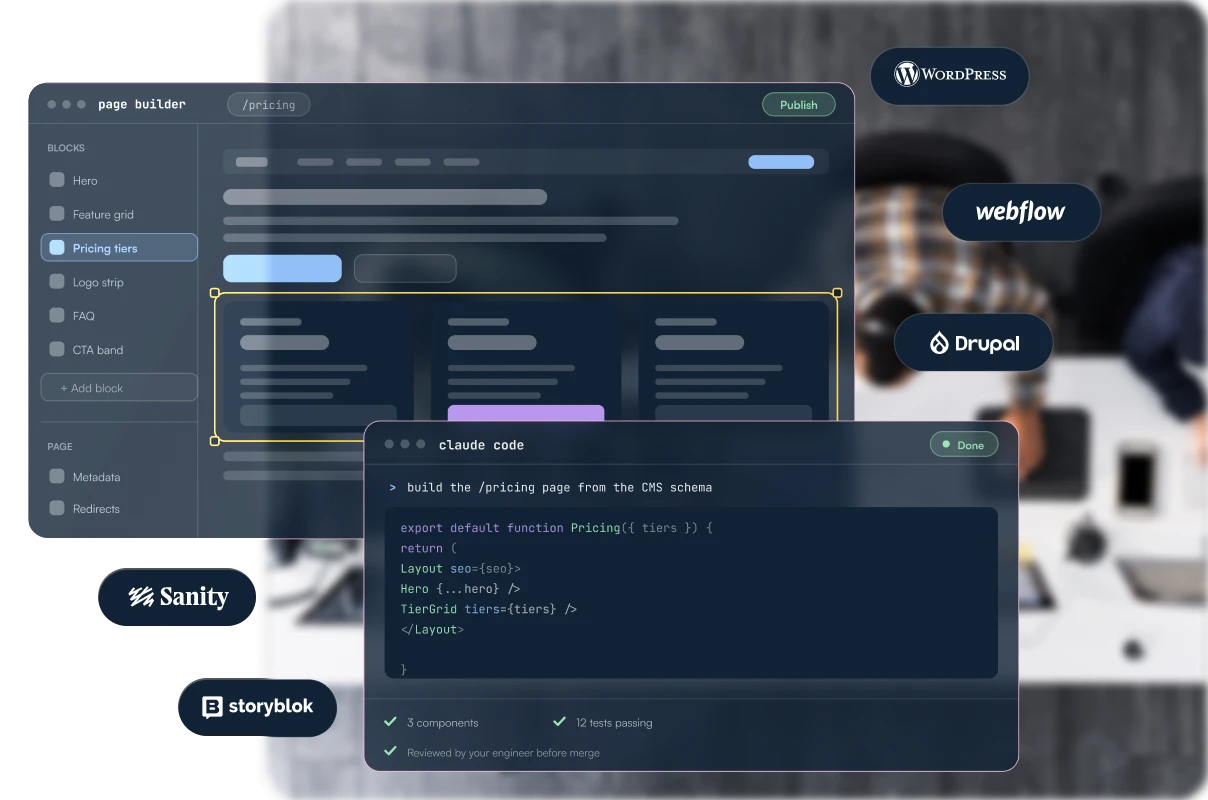
Platform build
We develop your new site on the right CMS — WordPress, Webflow, Drupal, Sanity, Storyblok, HubSpot and more — building faster with AI-assisted development like Claude Code.
Before
- A platform you inherited, never chose
With Productive Shop
- A platform chosen and built to fit your team
-
QA and testing
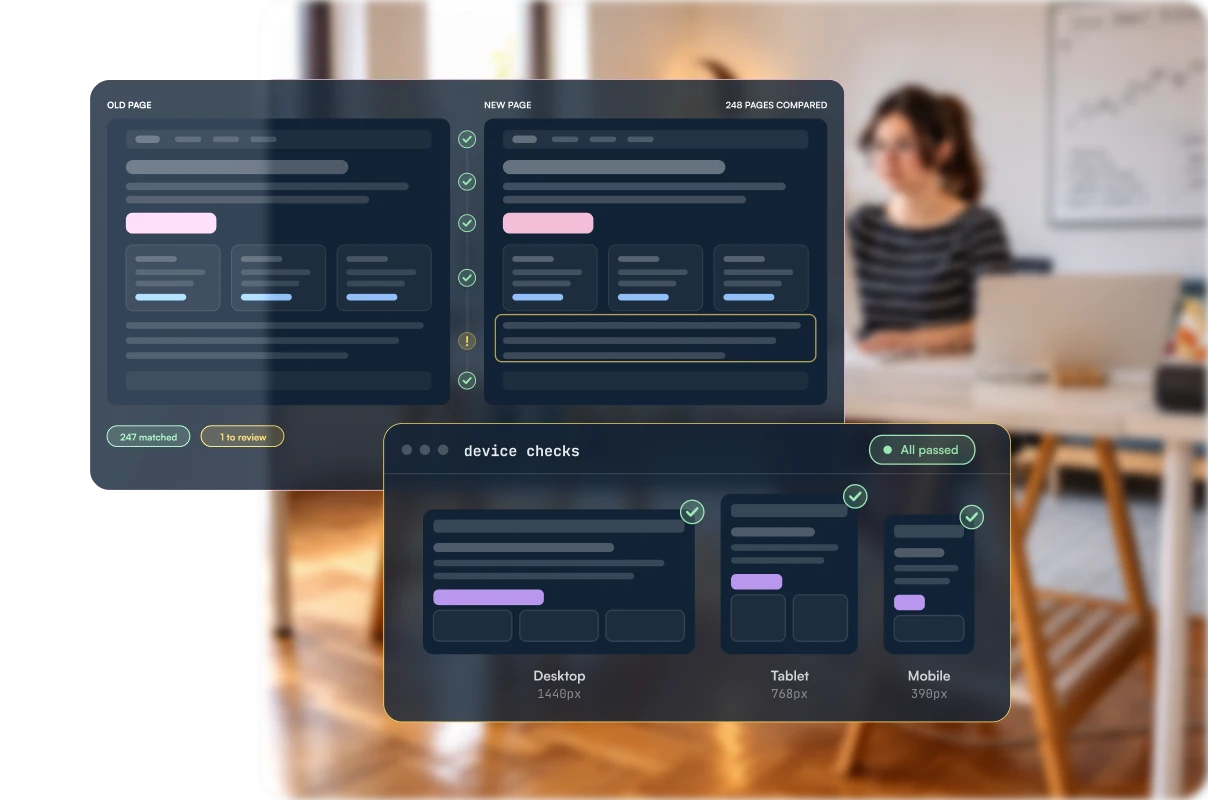
Every page gets checked for content accuracy using AI-assisted comparison, then tested for functionality and how it looks across devices and verified again once it’s live.
Before
- Bugs and security gaps found only after launch
With Productive Shop
- Every page tested, secured and approved before it’s live
-
Post-launch monitoring
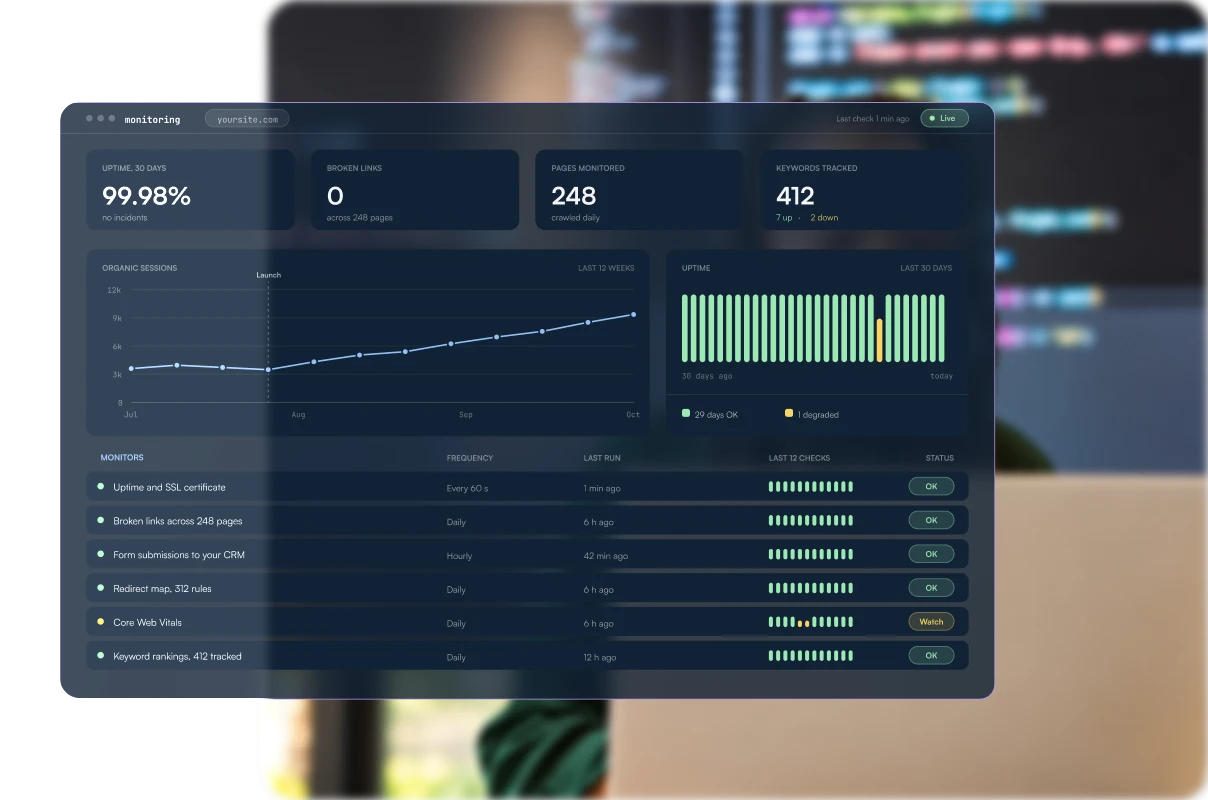
After your new site goes live, we keep watching it for breaks and ranking drops as part of your ongoing monthly web support.
Before
- Broken pages and rank drops that go unnoticed
With Productive Shop
- Broken pages and rank drops caught and reported fast
From your first call through post-launch monitoring
You get a dedicated customer success team that knows your project, plus developers and QA experts who have migrated SaaS sites before. You also see what’s happening to every page, tracked in Sorge, where your project’s status and progress live.
Insights for B2B teams planning a site migration
-
November 25, 2022 11 min read
How to (safely) move from one domain name to another
-
March 25, 2025 18 min read
The ultimate guide to Drupal setup for enterprise sites
-
December 20, 2023 13 min read
Webflow vs WordPress vs Sanity: What’s the best CMS for B2B websites?
-
May 14, 2024 16 min read
Why and how to use GitHub for WordPress development


Let’s relaunch your B2B SaaS website
If your site’s holding you back, whether it’s too expensive, too hard to update, or missing the features you need next, you already have the case for a replatform. Our website migration consultants will take care of the URL and ranking risk and walk you through exactly what’s involved, with no obligation. Just reach out to get started.
Frequently asked questions
Website migration and replatforming solve different problems, though most website migration agencies handle both together:
- Website migration moves your site to a new domain, URL structure or hosting setup, like when a company gets acquired and moves to its new parent brand’s domain. It includes tasks such as redirect mapping and ranking tracking.
- Replatforming changes the CMS or technology your site runs on, from a system like WordPress to platforms like Webflow or Contentful.
Productive Shop plans for migration and replatforming together from the start: a platform change doesn’t always mean new URL parameters, but when it does, we handle redirects and ranking protection as part of the same project.
Website migrations generally fall into a few types, such as:
- Domain migration moves your entire site to a new domain name.
- Subfolder consolidation redirects an acquired or separate site into a subfolder of the main domain, common after a merger.
- Subdomain migration moves content such as a blog from a subdomain into the main site structure.
- Platform migration changes the CMS or technology entirely, such as moving from WordPress to a headless CMS system.
Companies should consider a professional website migration service when they plan a rebrand, complete a merger or acquisition or find their current CMS too limiting to support new features. B2B SaaS businesses consolidating multiple websites or subdomains into a single site also benefit from a migration, since it simplifies management and proper redirect planning preserves your search rankings.
A website migration also makes sense when a company outgrows its hosting infrastructure or needs better site performance than its current platform allows.
The signs you need to replatform your website include:
- Your CMS limits what your team can build or update without developer help.
- You have a planned rebrand or acquisition that requires a new brand identity across the site.
- Your rankings decline due to technical issues your current platform cannot fix, such as slow load times or poor mobile experience.
- Your content lives across multiple domains or subdomains that should be consolidated into one site for a clearer user experience.
- Your current platform costs more than it should, or a different platform would cost significantly less for the same functionality.
- You want modern or AI-related features that your current platform can’t support.
A website migration includes several parts, from mapping every page to monitoring it after launch. At Productive Shop, we cover all of them through these features:
- Page mapping and inventory: We map every existing page and check its ranking value before anything moves.
- Redirect planning and testing: We plan and test every 301 redirect so no links break.
- Form and CRM testing: We test your forms and tracking setup before and after the move and submit a test lead each time to confirm it’s wired correctly.
- Technical validation: We validate technical health through Google Search Console to confirm indexing.
- Pre-launch checklist: Every page follows our checklist, which covers items like schemas and analytics tags.
- Post-launch monitoring: We keep watching your site for breaks and ranking drops as part of your ongoing monthly support.
- Image and design adjustments: We create new images when your new design doesn’t fit your old ones.
- On-page SEO fixes: We write meta titles and descriptions where they’re missing and fix broken internal links and missing alt text.
Curious how your current site’s SEO looks before your migration starts? Get a free SEO audit first.
Productive Shop migrates websites to and from WordPress, Webflow, Drupal, Storyblok, Contentful, Sanity, HubSpot and custom or headless builds. We also help companies move off early builders like Lovable once they outgrow what those platforms can do. The right platform depends on your team’s needs; for example, how much your marketing team wants to manage without developer help or how much customization your product requires.
Our website migration consultancy starts every migration with a technology consultation to recommend the platform that actually fits your team, whether that means staying on your current CMS or moving to something new entirely.
No, your website stays live throughout the migration. Productive Shop builds and tests your new site in staging first, then runs it through a pre-launch checklist before switching over. We set up redirects in advance so traffic moves from old pages to new ones the moment the site goes live. This staged approach avoids the downtime that comes from building directly on a live site, so visitors and search engines see a working site at every step.
No, Productive Shop’s web migration services take specific steps to prevent data loss during migration. We catalog every page, form and piece of content before the migration starts. We test your forms and tracking setup before the move and again after, submitting a test lead each time to confirm it’s wired correctly. Our technical checklist also verifies that schemas, analytics codes and other data connections carried over correctly, so your data stays intact throughout the process.