
 SEO Consulting
  SEO audit
  Uncover market and competitor insights
  Increase Sales Qualified Leads (SQL)
  For CMOs
  For demand generation leaders
  For technology startups
 Enterprise SEO
  Web Search Optimization
  Local SEO
  GEO
GEO  PPC Advertising
  CRM Consulting
  Website Design & Branding
  Website Development
  Web Support
  Web pricing
  Agent Automation
  Content Writing
  Editorial Calendar


 All resources
  Case studies
  Marketing fundamentals
  Worksheets
  Webinars
  Blogs from the field
  Essential SEO checklists
  Case studies
  The team
  Careers
 Win citations
in AI search
Buyers now ask ChatGPT, Perplexity and Gemini before they ever hit Google. Our generative engine optimization (GEO) services position your brand to be cited in the answers they see.

Trusted by SaaS leaders to win AI search visibility








Show up where buyers search next
Search behavior is moving faster than most teams can keep up with. Productive Shop has been working in AI search before it had a name, turning hard-won learnings into a playbook that SaaS brands can act on right away.
Become AI search-ready with Productive Shop
-
GEO and LLM strategy
Map a clear path to get your brand cited across ChatGPT, Perplexity, Gemini and AI Overviews, so buyers see you first when they ask AI for answers.
Before
- Random tactics pulled from LinkedIn hot takes
With Productive Shop
- A step-by-step plan to win citations across ChatGPT, Perplexity, Gemini and AI Overviews

-
LLM visibility tracking
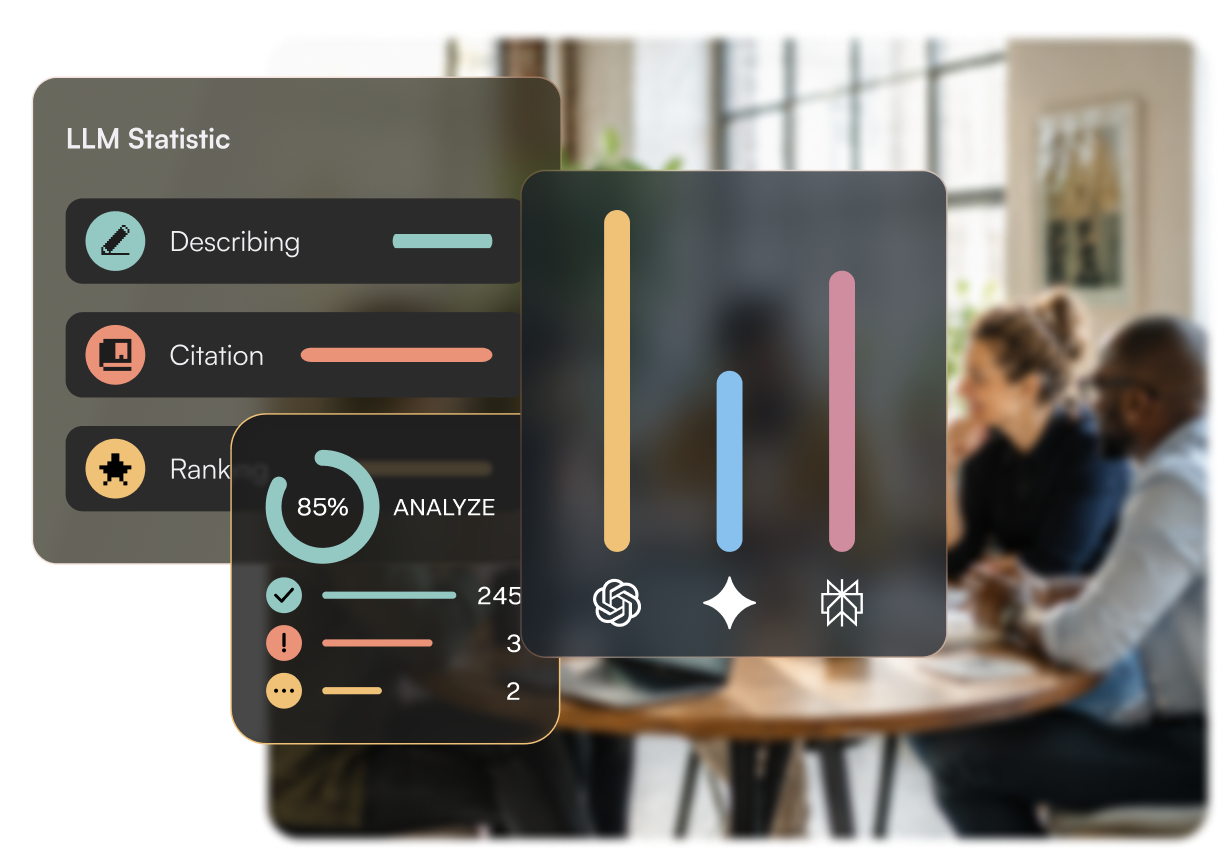
Monitor how AI tools describe, cite and rank your brand over time. Use these insights to spot where you’re losing ground and double down on what’s working.
Before
- No visibility into whether your AI presence is growing or slipping
With Productive Shop
- Live tracking of how AI tools describe, cite and rank you over time
-
AI brand visibility audit
Benchmark where your brand stands in AI search today. Find out which gaps to close to start winning citations.
Before
- No baseline for how your brand stacks up in AI search today
With Productive Shop
- A clear read on where you appear across the AI tools your buyers use

-
Prompt creation
Access a custom library of AI prompts mapped to your bottom-of-funnel keywords, so you show up in the searches that drive demos.
Before
- Guessing what your buyers ask AI before they convert
With Productive Shop
- A custom prompt library mapped to your keywords
-
GEO-ready content
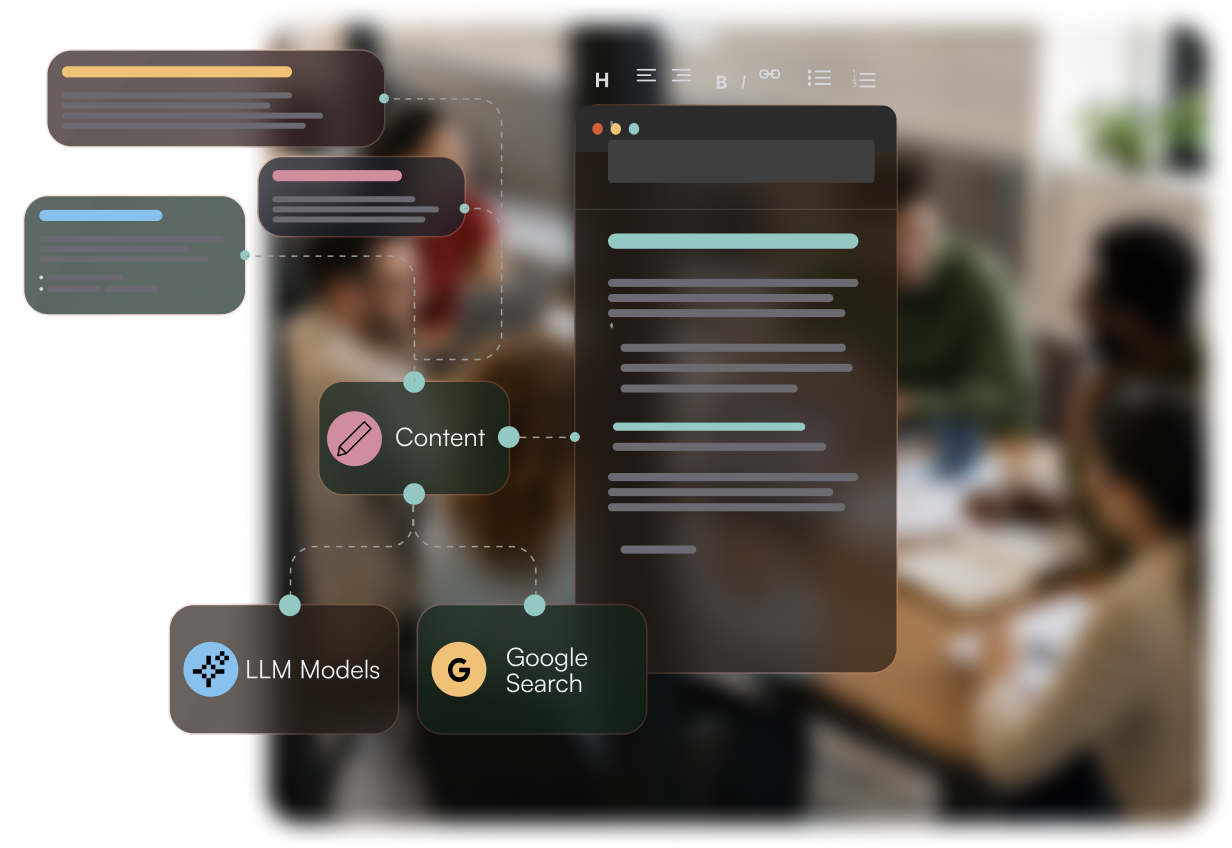
Get content built to feed LLMs, not just rank in Google. Every piece is structured for AI tools to quote, summarize and cite back to your brand.
Before
- Blog posts built for Google rankings that LLMs skip over
With Productive Shop
- Answer-first content engineered for AI tools to quote, summarize and cite

-
Off-site authority building
Build a content strategy for Reddit, Wikipedia and the niche platforms LLMs trust, so your brand keeps getting reinforced across the sources AI tools cite.
Before
- No presence on the platforms LLMs trust most
With Productive Shop
- Brand reinforced across Reddit, Wikipedia and the niche communities AI cites




Partner with a team that’s been in AI search since day one
Every quarter, we update our exclusive study on the impact of AI on SaaS search.

Expertise
First-mover advantage
Running GEO programs before it became a category
Win rate
100%
Clients cited in AI answers
Performance
15x
Average client growth in AI-driven traffic
Speed
Under 90 days
Average time to first AI citation
Coverage
+10
AI platforms tracked
AI platforms tracked include


Proof in AI citations, conversions and pipeline
See what GEO delivers when it’s done right.
-
MarTech
Keen: Building brand authority with GEO
-
GEO strategy
-
SEO consulting
-
Technical optimization
-
Content writing
7,833%
growth in AI Overview citations
520%
increase in AI-driven conversions
43%
boost in total organic conversions

-
-
FinTech
KYC provider: Turning AI searches into pipeline
-
Website architecture rebuilt
-
Web design and development
-
Copywriting
-
On-page SEO
608%
increase in AI conversions
358%
growth in LLM traffic
235%
boost in keyword visibility
-
Results that show the impact of GEO

“When we started with Productive Shop, ranking in AI search wasn’t even part of the conversation. A year later, we’re leading our competitive category in search visibility and showing up in AI Overviews for the terms that matter most to our buyers. The results have genuinely changed how we think about organic as a growth channel.”

“Productive Shop didn’t just optimize us for traditional search; they future-proofed our entire digital presence. By securing a 608% increase in AI conversions and a massive 358% surge in LLM traffic, they ensured we’re the trusted source when technical buyers use tools like ChatGPT or Perplexity. Productive Shop’s deep understanding of generative engine optimization truly moves the needle on revenue.”
We run every project like an extension of your team
Every engagement runs on the same operating model: a dedicated AM, daily Slack access, proprietary AI agents handling routine work and a live dashboard tracking every result.
Our generative engine optimization toolset


Insights to stay ahead of the AI search curve
-
February 10, 2025 17 min read
Generative engine optimization: Insights and best practices
-
October 10, 2023 10 min read
How CMOs can conquer AI marketing challenges: A roadmap for success
-
May 9, 2025 22 min read
How to avoid AI writing patterns: The ultimate guide to AI-generated content for SEO and GEO
-
April 23, 2025 14 min read
How to track AI traffic to your website in GA4




Let’s boost your AI visibility
AI search is the next channel your buyers are using. Let’s make sure your brand shows up in the answers. Contact our generative engine optimization agency to see how you can capitalize on it.
Frequently asked questions
AI search engine optimization is the process of optimizing your content to get it cited, summarized or reused by generative AI tools like ChatGPT, Perplexity, Claude and Google’s AI Overviews.
AI SEO focuses on how large language models (LLMs) retrieve, understand and cite your content in the answers they generate. That requires structuring your content in a way that’s easy to parse, aligning it with common user questions and incorporating authority signals across the web.
When done right, optimization for AI searches can get your content quoted by generative AI.
Regular SEO helps you rank on search engines (Google, Bing and more). SEO for LLM or GEO gets you to appear in AI-generated answers.
| Feature | Traditional search engine optimization (SEO) | Generative engine optimization (GEO) |
| Goal | Rank on SERP results | Get cited in AI-generated answers |
| Primary audience | Human users browsing SERPs | AI tools generating summaries and answers |
| Optimization focus | Keywords, meta tags, backlinks | Entities, structure, factual clarity, authority signals |
| Content format | Blog-style, keyword-rich, long-form | Answer-first, structured, LLM-readable |
| Performance signals | Clicks, traffic, dwell time | Citations, reuse, AI visibility |
| Platforms | Google, Bing, Yahoo | ChatGPT, Perplexity, Gemini, Google SGE |
| Measurement | Rankings and organic sessions | Mentions in AI tools and visibility in responses |
📈 Keep learning: Step-by-step guide to AI tracking on GA4
Yes, you definitely need GEO services even if you’re already doing web search optimization. That’s because SEO and GEO solve two different visibility problems.
SEO helps you rank in the search engine results page (SERP). GEO gets you to show up in AI-generated answers, where search behavior is shifting fast. You can rank first in Google and still be completely absent from the generative AI models.
Here’s how SEO and GEO agencies differ:
| What you get | SEO agency | GEO agency |
| Keyword strategy | Traditional keyword research and targeting | Prompt-aligned content mapped to AI query behavior |
| On-page optimization | Metadata, headers, internal linking | Answer-first formatting, LLM-friendly structure |
| Backlinks | High DA link building | Topical, LLM-trusted backlinks |
| Content creation | Long-form, keyword-dense blogs | Structured, entity-rich content optimized for AI reuse |
| Performance reporting | SERP rankings and traffic volume | Prompt visibility, AI citations, RAG source tracking |
| Visibility coverage | Search engines (Google, Bing) | Generative platforms (ChatGPT, Perplexity, SGE, Gemini) |
No, and anyone who says they can is lying.
LLMs are probabilistic. There’s no “ranking algorithm” to manipulate. But what we can do is maximize your chances by making your content easy to find, parse and trust — the signals these tools rely on when choosing what to surface.
You can’t game the system. But you can become the best possible source for the answer. That’s what we optimize for.
To optimize your content for AI search engines, you need to create content that’s clear, accurate, trustworthy and structured for AI models. AI search engines reward content that genuinely adds something new. Use these eight principles:
- Prioritize informational gain: Say something new. Add original data, unique insights or product-specific knowledge. LLMs can’t invent information — they cite what exists. If you’re the only source, you become the answer.
- Create author pages: Publish under real authors with bios, credentials and a consistent publishing history to help AI systems assess expertise and improve your content’s authority.
- Follow GEO writing practices: Use question-based headings, short sentences and answer-first formatting to match how LLMs interpret and summarize content.
- Use structured data and schema markup: Apply FAQ schema, semantic HTML and clean formatting.
- Establish authority signals: Earn mentions on platforms LLMs pull from, such as Reddit, Wikipedia, niche sites and build topical authority across your domain.
- Build a prompt-aligned content strategy: Reframe bottom-of-funnel keywords into natural-language prompts your audience might use in generative tools, even without search volume.
- Write with clarity and credibility: Be direct, factual and useful. Avoid fluff. Cite reputable sources and include author context when possible.
- Provide comprehensive answers: Go beyond basic definitions. Address follow-up questions, objections and context to increase reuse in generative responses.
🔖 Keep learning: The ultimate guide to schema markup